

Alpha Cellulose Industrial Grade
A highly purified, high-degree-of-polymerization cellulose fraction designed for industrial applications where chemical consistency, filtration performance, fibrous structure and low impurity levels are important.

GRADE HIGH PURITY CELLULOSE
High-Purity Industrial Cellulose
Alpha Cellulose
Alpha Cellulose is a highly purified fraction of cellulose characterized by a high degree of polymerization and relatively high chemical stability. It is obtained from refined plant-based cellulose materials through controlled processing designed to remove a substantial portion of non-cellulosic components and lower-molecular-weight fractions.
The material is insoluble in water and many common organic solvents and retains the fundamental hydroxyl-rich structure of cellulose, providing opportunities for physical processing and further chemical modification.
What Is Alpha Cellulose?
Cellulose is composed of glucose units connected through β-(1→4) glycosidic bonds. Natural cellulose contains regions with different degrees of molecular order and polymerization.
Alpha Cellulose refers to the high-purity, high-degree-of-polymerization fraction of cellulose that remains after appropriate chemical treatment of plant-derived cellulose materials.
Designed for Industrial Performance
Alpha Cellulose combines purity, structural integrity, filtration characteristics and chemical functionality for demanding industrial applications.
High Purity
Designed for applications where a relatively clean cellulose feedstock is required and impurities may negatively affect process consistency.
High Degree of Polymerization
Retains longer cellulose chains compared with more extensively hydrolyzed cellulose materials, preserving its fibrous and structural character.
Filtration Performance
Fibrous particles can create a porous and stable filtration cake capable of retaining suspended particles while allowing liquid flow.
Thermal Stability
Cellulose remains stable within its applicable processing range and ultimately decomposes rather than exhibiting a conventional melting process.
Chemical Modifiability
Hydroxyl groups along the cellulose backbone provide reactive sites for chemical modification and the production of cellulose derivatives.
Industrial Consistency
High-purity cellulose provides a controlled feedstock for industrial processes requiring repeatable physical and chemical characteristics.
Where Alpha Cellulose Is Used
Alpha Cellulose – Industrial Grade can be used in a wide range of industrial processes where high-purity cellulose, fibrous structure and controlled performance are required.
Chlor-Alkali & Brine Filtration
One of the specialized applications of high-purity Alpha Cellulose is filtration in chlor-alkali processes. In brine filtration, cellulose-based filter aids can establish a porous filtration layer capable of retaining suspended impurities while maintaining liquid flow.
Stable Filtration Performance
Alpha Cellulose can function as a primary filter aid or precoat material in industrial filtration systems.
Its fibrous particles can form a permeable filtration cake that helps capture suspended solids, improve filtrate clarity and maintain filtration permeability.
Cellulose filtration materials are also considered relatively non-abrasive compared with certain mineral-based filtration aids.
High-Purity Cellulose for Filter Materials
High-purity Alpha Cellulose is an important raw material in the manufacture of cellulose-based filter materials and specialty paper products.
Filter Paper
Its high degree of polymerization and fibrous structure contribute to the mechanical integrity and filtration characteristics required in filter paper and related products.
Filter Media
Cellulose-based filter media can be engineered for different filtration speeds and particle-retention ranges according to the intended application.
A Controlled Cellulose Feedstock
Because Alpha Cellulose provides a relatively pure and consistent cellulose backbone, it can serve as a starting material for the manufacture of chemically modified cellulose products.
The hydroxyl groups along the cellulose polymer can undergo chemical reactions to produce cellulose derivatives with different solubility, rheological, film-forming and functional properties.
Polymer, Composite & Welding Applications
Polymer & Composite Applications
Alpha Cellulose can be incorporated into polymer and composite formulations as a renewable reinforcing or filler component. Its fibrous structure can contribute to mechanical reinforcement, dimensional stability and material structure when appropriate dispersion and matrix compatibility are achieved.
Final performance depends strongly on particle size, aspect ratio, surface chemistry, moisture content and polymer compatibility.
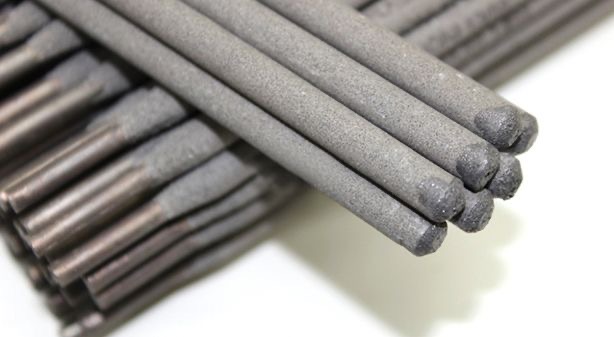
Welding Electrode Applications
Selected industrial grades of Alpha Cellulose can be used in welding electrode formulations. The cellulosic component can influence the behavior of the electrode coating during thermal decomposition and welding.
Controlled particle size, moisture content, purity and thermal characteristics are important for consistent processing and welding performance.
Alpha Cellulose vs. Cellulose Powder
Although the terms are sometimes used interchangeably in commercial markets, they should not automatically be treated as identical technical products.
Alpha Cellulose
Specifically emphasizes the high-purity, high-degree-of-polymerization fraction of cellulose. It is generally selected when purity, fibrous structure, filtration performance or use as a controlled cellulose feedstock is important.
Cellulose Powder
A broader classification referring to cellulose that has been mechanically processed into powder or finely divided form. Commercial characteristics can vary significantly between grades.
The actual distinction between commercial grades should always be confirmed through the manufacturer's technical specification and Certificate of Analysis.
Why Choose Alpha Cellulose?
Selecting the Right Industrial Grade
Industrial Alpha Cellulose should be selected according to the specific filtration, processing, chemical or material requirements of the intended application.
| Parameter | Technical Significance |
|---|---|
| Alpha Cellulose Content | Indicates the proportion of high-purity cellulose fraction. |
| Particle Size Distribution | Controls filtration rate, cake structure and dispersion. |
| Fiber Morphology | Critical for filtration and reinforcement. |
| Degree of Polymerization | Influences molecular and structural characteristics. |
| Moisture Content | Important for storage and process consistency. |
| Ash Content | Indicates inorganic residue level. |
| Bulk Density | Influences handling, dosing and filtration behavior. |
| Whiteness | Important for visual and paper-related applications. |
| pH | Relevant for process compatibility. |
| Solubility / Alkali Behavior | Important for specialized chemical processes. |
Built Around Your Process
Industrial and process filtration, precoat filtration, brine filtration and filter-aid systems.
Feedstock for selected cellulose derivatives and specialty chemical processes.
Manufacturing of cellulose-based filter materials and specialty paper products.
Bio-based filler and reinforcing component in selected polymer systems.
Filler, structural additive, reinforcement and functional cellulose component.
Application-specific cellulose grades for processes requiring controlled physical characteristics.
Application-Specific Industrial Grades
Industrial Alpha Cellulose grades can be selected according to the requirements of the intended application.
Key characteristics such as particle size, fiber morphology, purity, moisture, bulk density, ash content and filtration behavior can be controlled or specified according to the target process.
For industrial procurement, the final grade should be selected based on application trials and the relevant technical specification or Certificate of Analysis (CoA).
Grade selection should be confirmed against the relevant technical specification and application requirements.
Find the Right Alpha Cellulose Grade
Discuss your industrial application, filtration requirements and technical specifications with the Gulf Trade team to identify a suitable cellulose grade.