

Cellulose Powder Industrial Grade
A purified, finely processed cellulose material engineered for filtration, reinforcement, filling, processing, and specialized industrial formulations.


POWDER PRODUCT IMAGE
A flexible cellulose platform for industrial formulations.
Industrial Grade Cellulose Powder is a purified, finely processed cellulose material derived from natural plant-based cellulose sources.
It consists primarily of cellulose, a linear polysaccharide composed of β-(1→4)-linked glucose units. Its fibrous structure, chemical stability, low abrasiveness and renewable origin make it a versatile industrial raw material.
Depending on particle size, fiber morphology, purity, bulk density and moisture content, Cellulose Powder can be engineered for different industrial applications.
Performance starts with physical structure.
Industrial Cellulose Powder can be tailored through its physical and compositional characteristics. These parameters determine how the material behaves during processing and in the final formulation.
Particle Size
Influences dispersion, surface area, filtration, packing and flow behavior.
Fiber Morphology
Controls filtration characteristics and reinforcement performance.
Purity
Important for demanding industrial and formulation applications.
Bulk Density
Influences handling, dosing and formulation volume.
One material. Multiple industrial functions.
Filler & Extender
Functions as a lightweight, renewable filler in polymer, coating, construction and other industrial formulations.
Reinforcement
Its fibrous structure can contribute to mechanical reinforcement, structural integrity and dimensional stability.
Filtration Aid
Cellulosic fibers can form a porous filter cake that retains suspended particles while allowing liquid to pass through.
Binder & Structural Additive
Can contribute to cohesion and structural integrity while providing opportunities for interaction with other formulation components.
Rheology & Texture
Depending on morphology and concentration, cellulose can influence consistency, flow behavior and physical structure.
Processing Aid
Can be incorporated where improved handling, dispersion, filtration or physical structure is required.
Designed for diverse industrial environments.
Industrial Grade Cellulose Powder can be used across filtration, coatings, polymers, construction, welding and specialty formulations.
Industrial Filtration
Filter aids and precoat applications.
Paints & Coatings
Functional filler and structural additive.
Polymer Compounds
Bio-based filler and reinforcing material.
Rubber & Elastomers
Functional material for selected formulations.
Construction Materials
Fibers, fillers and functional additives.
Adhesives & Sealants
Structural and formulation support.
Welding Electrodes
Cellulose-containing electrode systems.
Paper & Board
Selected paper and filter-media applications.
Specialty Formulations
Customized industrial material solutions.
Built around effective filtration.
Cellulose Powder is particularly useful as a filtration aid because cellulose fibers can form a stable and porous filter cake.
Cellulosic filter aids can also be used as precoat materials to establish an effective filtration layer before the main filtration process begins.
Grade selection depends on the final process.
The same cellulose platform can behave differently depending on particle size, morphology, moisture, surface characteristics and formulation compatibility.
Paints & Coatings
In selected coating formulations, Cellulose Powder can be used as a functional filler or structural additive.
- Film structure
- Surface texture
- Bulk modification
- Mechanical reinforcement
- Controlled rheological behavior
Polymer & Composite Systems
Cellulose Powder can serve as a bio-based reinforcing or filler material in polymer and composite systems.
- Renewable material content
- Low density
- Fiber reinforcement
- Matrix compatibility
- Dispersion-dependent performance
Construction Materials
Cellulose-based materials are used in selected construction formulations as functional fibers, fillers and additives.
- Water management
- Structural reinforcement
- Crack-control characteristics
- Workability
- Material consistency
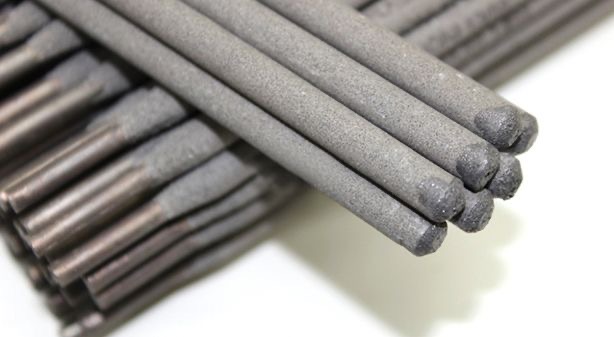
Welding Electrodes
Cellulose-based materials can be incorporated into selected welding electrode formulations.
- Particle size requirements
- Moisture control
- Purity requirements
- Thermal behavior
- Application-specific specification
Why industrial cellulose?
Renewable
Plant-derived raw material with a predominantly bio-based profile.
Chemically Stable
Suitable for a broad range of selected industrial environments.
Low Abrasiveness
Valuable in filtration and applications where equipment wear is a consideration.
Lightweight
Fibrous structure and low density support lightweight formulation strategies.
Flexible Particle Size
Different particle-size ranges can be selected for specific applications.
Modifiable
Can be physically or chemically modified for specialized applications.
Versatile
Compatible with a broad range of industrial formulation systems.
Biodegradable
Biodegradable under suitable environmental conditions.
Technical parameters that define the grade.
Industrial Cellulose Powder should be selected according to the technical requirements of the final process and formulation.
| Parameter | Importance |
|---|---|
| Cellulose Purity | Determines suitability for demanding industrial processes. |
| Particle Size | Influences dispersion, filtration, surface area and flow. |
| Fiber Morphology | Determines filtration and reinforcement behavior. |
| Moisture Content | Important for storage, processing and formulation stability. |
| Bulk Density | Affects handling, dosing and formulation volume. |
| Ash Content | Important where low inorganic residues are required. |
| Degree of Polymerization | Influences structural and physical characteristics. |
| Whiteness | Important in visual and coating applications. |
One cellulose platform, optimized for different needs.
Industrial Grade Cellulose Powder can be manufactured or selected according to application-specific requirements.
Select the right cellulose grade.
For technical procurement, the recommended grade should be determined according to particle-size distribution, purity, moisture, bulk density and end-use conditions.